From Vision to Trust: The Web3 Brand Journey
Introduction: Every Web3 Brand Starts With Belief: Then the Market Asks for Proof
Every crypto project begins with a vision.
At launch, brands are built on possibility rather than proof. Manifestos speak in ideals. Visual systems lean into abstraction. Illustrations, symbols, gradients, and emojis create a world that feels open, optimistic, and communal. This is not accidental it is how belief is formed before infrastructure exists.
But as projects mature, the questions change.
Partners want evidence.
Institutions want clarity.
Users want reassurance.
At this stage, a brand that still communicates potential instead of progress begins to work against itself. The Web3 brand journey from vision to trust is not cosmetic. It is strategic, and it mirrors the lifecycle of the protocol itself.
Projects that fail to evolve their branding stall credibility. Projects that evolve too early lose authenticity. The ones that win understand when and how to shift.
Why Vision-Driven Branding Works in the Early Stages
Before a token launch, before real usage, before measurable traction, Web3 brands are selling belief.
This is why abstraction works.
Symbol-heavy branding allows projects to represent something that is not yet fully defined. It communicates direction rather than detail. Instead of explaining mechanics, it invites interpretation. Early believers project their own hopes onto the brand—and that shared projection creates momentum.
This phase of Web3 brand development has clear advantages:
Flexibility – The brand can stretch as the product evolves
Inclusivity – Community members feel part of shaping the narrative
Speed – Vision travels faster than documentation
For early-stage projects, abstraction is not a weakness. It is the only honest way to communicate something still being built.
The mistake is not starting here.
The mistake is staying here too long.
When Vision Becomes Friction
Once a product ships, the market expects alignment between story and reality.
At this point, a brand that still relies entirely on symbolism begins to create doubt rather than excitement. The project may be delivering, but the brand still speaks in hypotheticals.
This disconnect is subtle but costly.
Audiences evolve as projects grow. Early adopters give way to operators, partners, enterprises, and regulators. These audiences are not hostile to vision but they require evidence.
What worked at launch now creates resistance.
This is the inflection point where Web3 brands must evolve from promise to proof.
What Brand Maturity Actually Looks Like
Brand evolution is not about abandoning identity. It is about grounding it.
Across successful Web3 projects, the shift is consistent:
Illustrations give way to real photography showing teams, users, and events
Manifestos evolve into benefit-driven messaging tied to shipped features
Roadmaps are replaced or supplemented by case studies, metrics, and outcomes
This is not a rebrand. It is maturation.
The brand begins to answer new questions:
Is this real?
Is this working?
Is this trusted by others like me?
Case Study: Coinbase
Coinbase 2017:

Coinbase 2025:
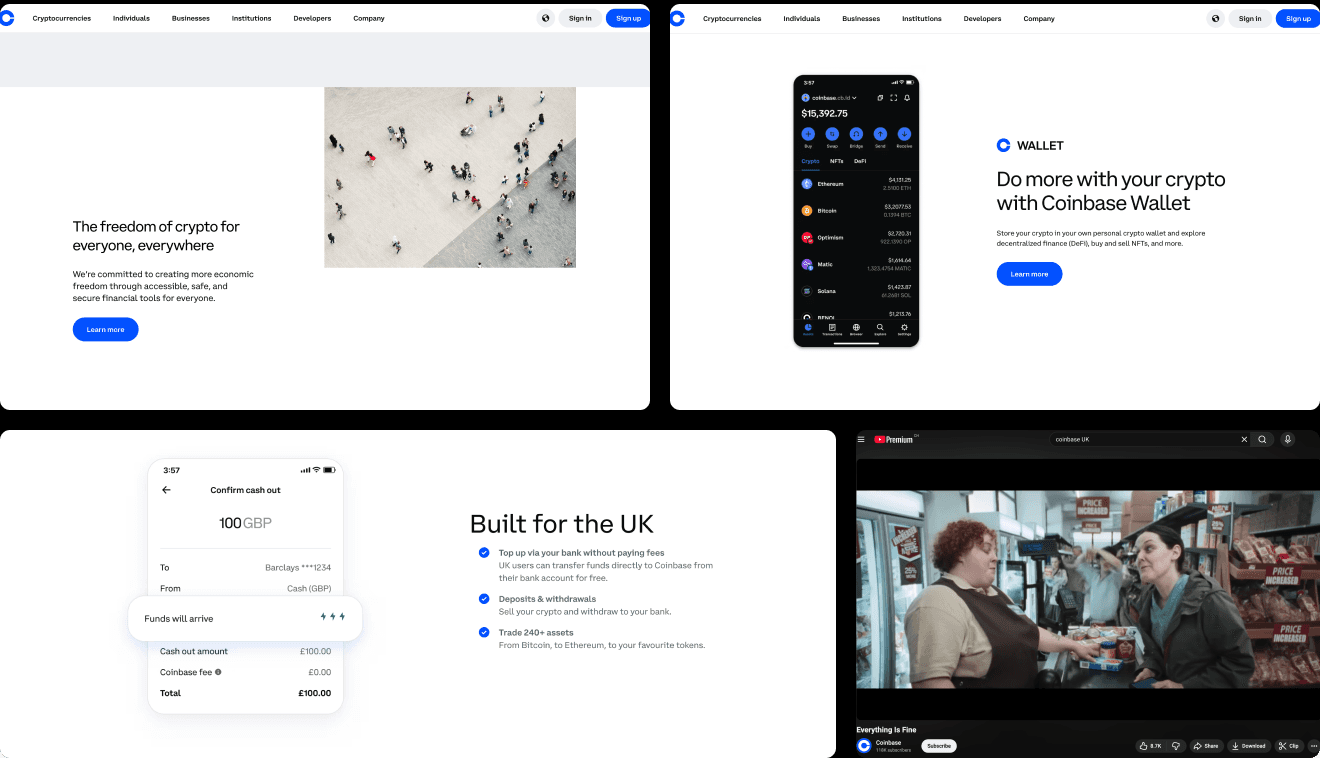
Coinbase offers one of the clearest examples of Web3 brand evolution done well.
In its early years, the brand leaned heavily on flat illustrations and symbolic imagery globes, nodes, abstract representations of a global crypto economy. This made sense in 2017, when crypto itself was largely theoretical to mainstream audiences.
By 2025, that visual language had shifted.
Illustration gave way to authentic photography. Real people replaced abstract forms. Product interfaces became central brand assets. Messaging moved away from evangelism toward clarity explaining how Coinbase products work and why they matter.
Importantly, the brand did not abandon its identity. Coinbase remained positioned as an accessible, trusted guide. The execution simply evolved to match reality.
Case Study: Solana
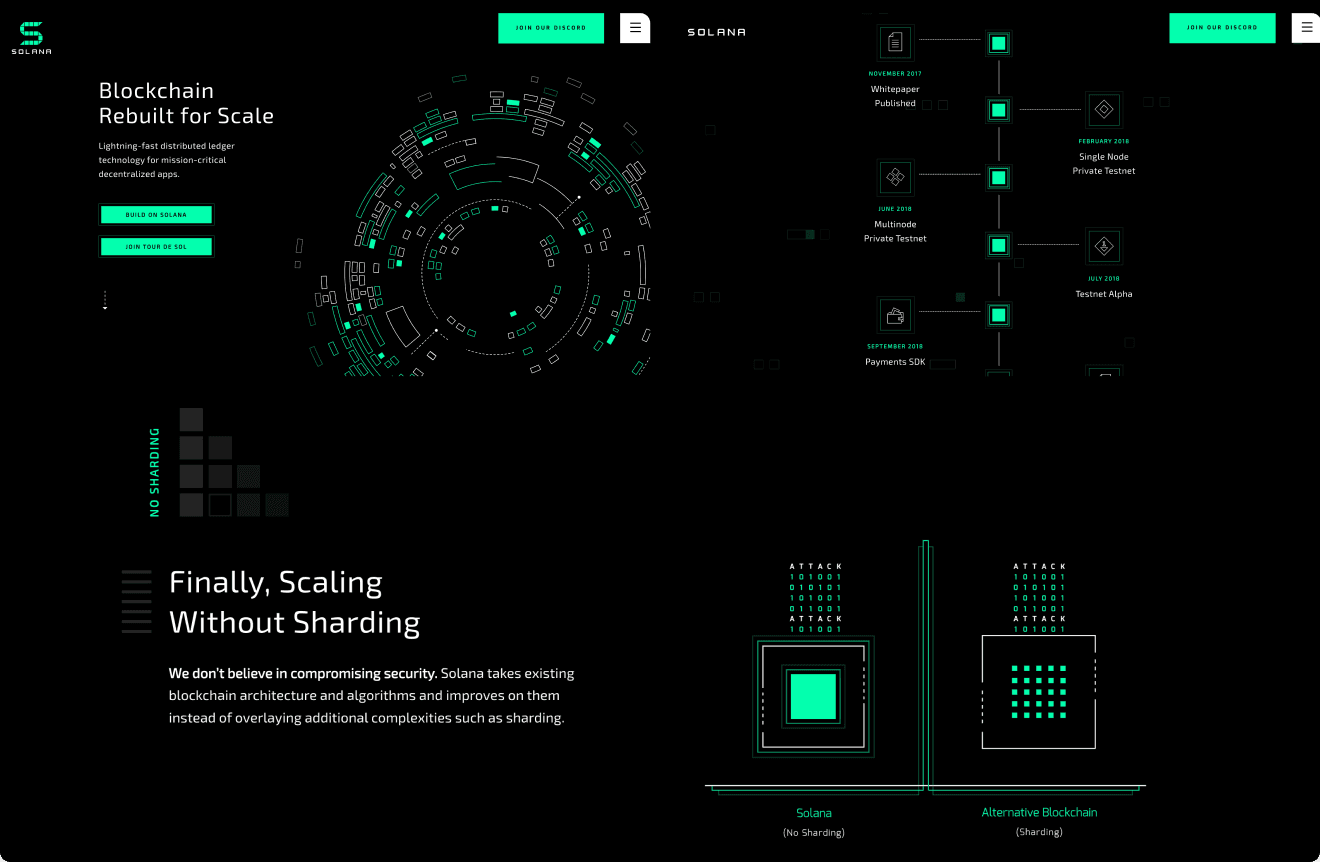
SOLANA 2020:
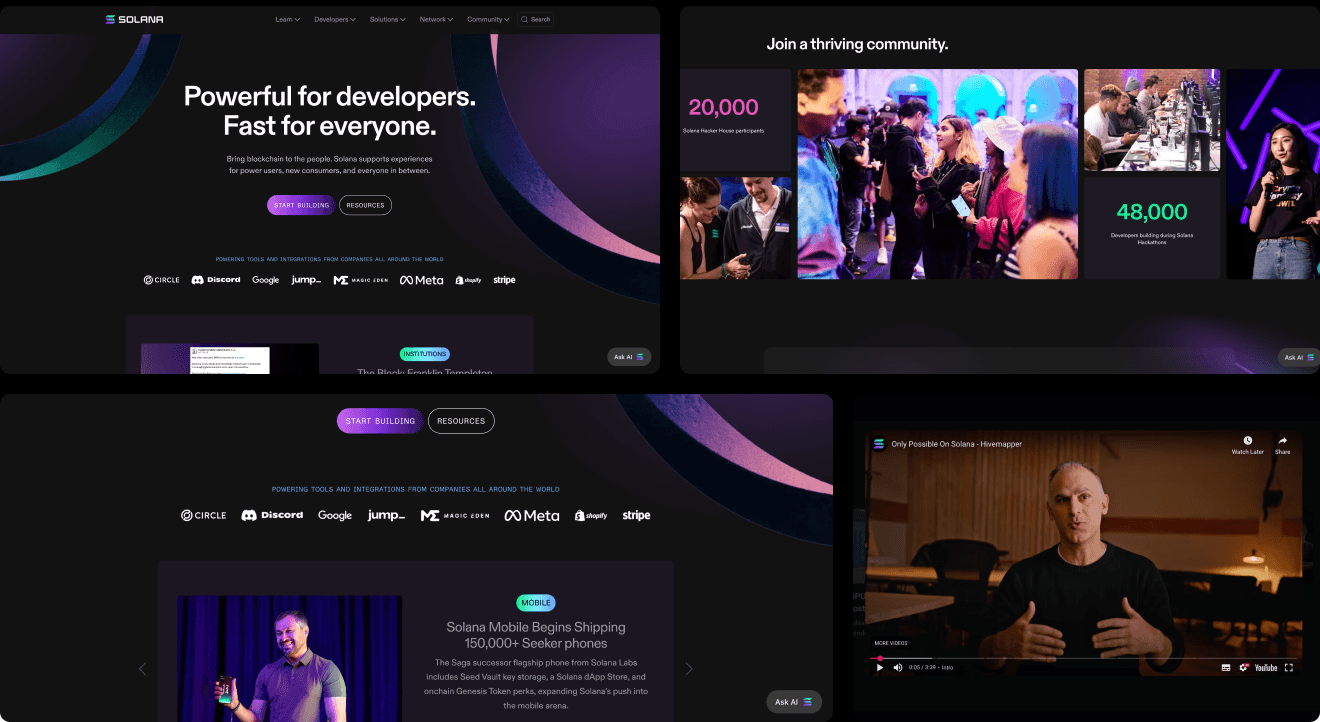
SOLANA 2025:
Solana followed a similar trajectory through a different aesthetic lens.
Early Solana branding relied on abstract 2D visuals and conceptual language focused on future performance. As the ecosystem matured, those abstractions evolved into photorealistic 3D environments, textured visuals, and ecosystem-led storytelling.
Messaging shifted as well. Instead of emphasizing theoretical throughput, Solana began highlighting:
Ecosystem growth
Major partnerships
Developer adoption
Performance metrics
The promise remained but it was now backed by visible evidence.
The brand matured without losing its technical edge or developer-first ethos.
Trust Signals Replace Vibes as Projects Scale
As Web3 projects grow, trust becomes the primary job of branding.
At this stage, effective blockchain branding relies on grounding elements:
Team and community photography → signals legitimacy
Product UI and dashboards → signals delivery
Testimonials, partnerships, and case studies → signal validation
These are not aesthetic choices. They are responses to a more skeptical, more informed audience.
Strong brands understand that what needs to be communicated has changed and adapt accordingly.
Brand Evolution Is a Growth Strategy, Not a Design Exercise
One of the most common mistakes in Web3 is treating brand evolution as a “refresh” instead of a strategic shift.
Some projects cling to vision-heavy branding long after shipping real value. Their products mature, but their brands still say someday. This creates distrust.
Others swing too far in the opposite direction adopting enterprise aesthetics before earning credibility. This creates a different kind of friction: the brand promises stability the project hasn’t yet demonstrated.
The strongest Web3 brands evolve in sync with reality.
They let the brand mature at the same pace as:
Product adoption
Community depth
Institutional exposure
This alignment is what turns early belief into long-term trust.
Where Are You in the Web3 Brand Journey?
Every project sits somewhere on this spectrum.
Ask yourself honestly:
Are we still selling possibility or proving impact?
Does our brand reflect where we are today, or where we were at launch?
Are we reinforcing trust with evidence or relying on momentum and memory?
There is no “correct” stage only honest alignment.
In Web3, brands that evolve with their reality compound credibility. Brands that don’t become liabilities.
Conclusion: Vision Builds Belief, Trust Sustains It
Vision is how Web3 projects begin.
Trust is how they survive.
The projects that endure understand that branding is not static. It is a living system that must mature alongside technology, users, and expectations.
Your brand should never outpace your reality.
But it should never lag behind it either.
In a market that constantly recalibrates trust, the most valuable brands are the ones that know when it’s time to deliver on the dream.
FAQs
Why do early-stage Web3 brands use abstract visuals?
Because abstraction communicates possibility before products exist.When should a Web3 brand evolve?
When traction, users, or partnerships require proof instead of promise.Is brand evolution the same as a rebrand?
No. It is a maturation, not a reset.What happens if a brand doesn’t evolve?
It creates friction, skepticism, and stalled credibility.Can evolving too early hurt a project?
Yes. If the brand promises stability before the product delivers it.What defines a strong Web3 brand long-term?
Alignment between vision, execution, and evidence.
